
Blog
Discover how the CO₂ laser machine revolutionizes modern fabrication with unmatched precision and efficiency. As a leading CO₂ fractional laser machine manufacturer, supplier, and factory specializing in CNC CO₂ laser cutting machines, engraving machines, and marking solutions, we provide OEM options to meet diverse industrial demands. Whether for intricate designs or large-scale production, our CO₂ laser technology delivers exceptional performance for every manufacturing need.
Understanding CO₂ Laser Machines and Their Core Capabilities
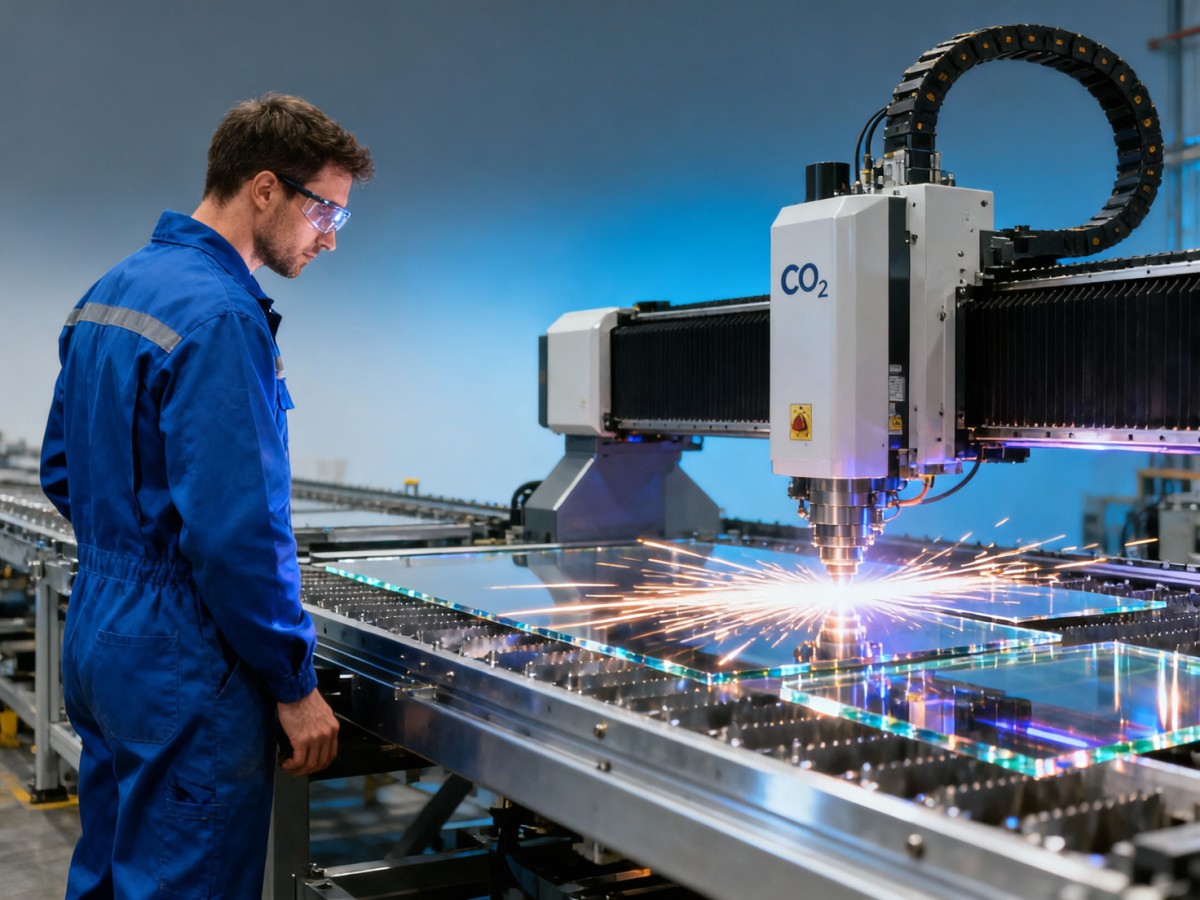
CO₂ laser machines are among the most mature and reliable technologies for material processing. Utilizing a CO₂ gas mixture as the lasing medium, these machines can generate output power ranging from 30W to 600W for engraving models, and up to 5kW for industrial cutting systems. Their operational wavelength around 10.6μm ensures efficient energy absorption by organic materials such as wood, acrylic, leather, and paper, as well as thin metals when used with assisting gases.
Unlike fiber or diode lasers, a CO₂ laser cutter maintains a fine, adjustable beam with positioning accuracy typically within ±0.03mm, making it suitable for both detailed engraving and high-speed cutting. This precision explains why many OEM manufacturers prefer CNC-controlled CO₂ laser machines when producing signage, packaging dies, or textile patterns requiring repeatable accuracy over thousands of cycles.
The modular design of a modern CO₂ laser system allows multi-functional integration including engraving, cutting, and marking. Typical configurations cover working areas from 400×600mm for compact desktop models to 1600×3000mm for large-format industrial lines, providing flexibility across small-batch and continuous production environments.
Key Technical Indicators
The performance of each model depends on the combination of laser tube quality, optical alignment, motion system, and cooling efficiency. For high-end OEM CO₂ CNC cutting machines, water-cooling systems can maintain continuous operation for up to 12 hours per cycle, while air-assist filters keep the optics clean and prolong lifespan by 20–30%.
Where CO₂ Laser Machines Excel in Industrial Applications
Across fabrication industries, CO₂ laser engravers and cutters address diverse needs—from fine graphics to deep penetration cuts—delivering consistent edges and minimal thermal distortion. They are widely used in signage manufacturing, textile decoration, wooden crafts, packaging prototyping, and even circuit marking for non-metallic PCBs.
In textile industries, for example, CNC CO₂ laser cutting systems allow patterns to be cut with tolerance under ±0.1mm across continuous rolls up to 100m length. In acrylic fabrication, laser-polished edges reduce post-processing by approximately 40%, optimizing production cycles and cost efficiency. Paper and leather industries also benefit from burn-free edges, maximizing smoothness and minimizing waste.
Additionally, laser marking of plastic housings in electronics or automotive parts can reach character depths of 0.02–0.3mm with high durability under UV and temperature exposure. A single CO₂ marking unit can process up to 5000 components per shift, depending on complexity and rotation mechanism.
Common Application Categories
- Laser cutting and engraving for organic and polymer materials
- Marking for product traceability and decorative labeling
- Die-board cutting for packaging industries
- Customized OEM laser integration into automated CNC lines
- Sampling and prototyping during product development cycles
Each application benefits differently from the CO₂ wavelength characteristics. While metallic applications remain niche, hybrid systems combining CO₂ and fiber lasers provide flexible solutions across mixed-material facilities seeking material optimization without frequent equipment changeovers.
How to Choose the Right CO₂ Laser Machine for Your Production Goals
Selecting a laser system depends on balancing investment, precision requirement, and workload intensity. Key purchasing criteria generally involve 4 major dimensions: power rating, work area, motion accuracy, and control interface compatibility. Each dimension directly determines your processing capacity and operating cost within the first 6–12 months of use.
For startups or small workshops producing below 300 units per day, a 60–150W desktop CO₂ engraver often offers sufficient precision at moderate cost. Mid-size factories with monthly throughput around 10,000 units usually prefer OEM CNC laser cutters with dual-head configuration and auto-focus control. Large-scale facilities adopting continuous 24-hour cycles benefit from automated loaders and chiller-integrated CO₂ laser platforms up to 3000W.
Maintenance and replacement cycles also influence total cost of ownership. Typical CO₂ laser tubes last around 4000–6000 working hours, whereas RF metal tubes extend lifetime to 8,000–10,000 hours, reducing maintenance intervals by nearly 35% over the first two years.
Selection Matrix for Buyers
As an experienced OEM CO₂ laser machine manufacturer and factory wholesaler, we help clients configure proper solutions based on utilization rate (e.g., ≤8 hours/day, 8–16 hours/day continuous, or 24/7 industrial grade), ensuring cost-effectiveness while preserving processing consistency.
Cost Efficiency, Operation Tips, and Maintenance Insights
The cost of a CO₂ laser system involves three parts: equipment investment, operational consumption, and maintenance. Typically, stable operations achieve ROI within 12–18 months. For example, a 150W CO₂ CNC cutter consuming around 1.8kW per hour can handle multiple 8-hour shifts with negligible power fluctuations, enhancing long-term operating predictability.
To sustain precision, operators should realign mirrors every 200–300 running hours and replace the laser tube after approximately 5000 hours. Keeping the temperature between 10–25°C ensures beam stability and extends optics lifespan by up to 25%. Regular lubrication of guide rails every 2 weeks maintains repeatability within factory specifications.
For mass-production users, adopting automatic focus calibration can reduce downtime by 10–15%, while dual-head synchronization increases productivity by 40% in parallel engraving modes. Using filtered air-assist systems further cuts post-cleaning time by nearly half compared to unfiltered setups.
Maintenance Schedule Overview
- Optics check: Every 100–150 working hours
- Cooling system cleaning: Once per month or 4-week interval
- Beam alignment verification: Quarterly or after long-distance transport
- Software calibration: Every 6 months to ensure cutting path accuracy
- Consumable replacement: 4000–6000 working hours depending on usage
Well-structured maintenance protocols significantly improve cost efficiency, particularly for OEM partners running high-frequency production cycles. Integrating predictive sensor monitoring allows real-time detection of power drift exceeding 5%, facilitating pre-emptive component replacement before major downtime occurs.
FAQ: Common Questions About CO₂ Laser Machines
How long does it take to deliver a customized CO₂ laser system?
Typical delivery time ranges between 3–6 weeks depending on customization complexity and certification requirements. OEM-integrated solutions or large-format models may extend to 8 weeks for full electrical compliance testing and parameter tuning.
Can CO₂ lasers cut metals effectively?
CO₂ lasers are optimized for non-metallic materials. However, thin stainless steel or aluminum under 1.2mm can be processed using oxygen assist. For thicker metals or reflective surfaces, fiber laser alternatives should be considered for efficiency and beam stability.
What safety measures should be in place?
Operators should wear protective eyewear rated for 10.6μm wavelength and ensure exhaust ventilation maintaining air exchange rates above 10 times per hour. Machine doors should integrate interlock switches that cut laser emission instantly when opened.
What certifications are relevant for export?
Most markets require CE, ISO9001 compliance, and in some cases FDA or RoHS documentation. Our manufacturing line adheres to international electrical safety and environmental directives, streamlining import clearance for global partners.
Why Partner with Our CO₂ Laser Machine Factory
As a specialized CO₂ fractional laser machine manufacturer and full-service supplier, we provide end-to-end support from prototype consultancy to OEM integration. Our production capability covers annual output exceeding 2000 units across cutting, engraving, and marking platforms, enabling short lead times of 15–30 days for standard configurations and scalable volumes for private-label requests.
We combine precision design with industrial-grade CNC control, ensuring customers achieve consistent performance under continuous workloads. Our engineers assist with parameter confirmation, process optimization, and on-site installation guidance, minimizing ramp-up time and ensuring compliance with both local and international standards.
Whether you need to confirm power configuration, request custom worktable dimensions, verify delivery cycles, or obtain technical data sheets, our team is ready to provide prompt and professional consultation. Contact us to discuss your OEM CO₂ laser cutting or engraving project, and discover how automation-ready CO₂ technology can elevate production accuracy and long-term efficiency.